
A Bridge Over
What the Israel case reveals about the future of academic cooperations
Eric Zimmerman
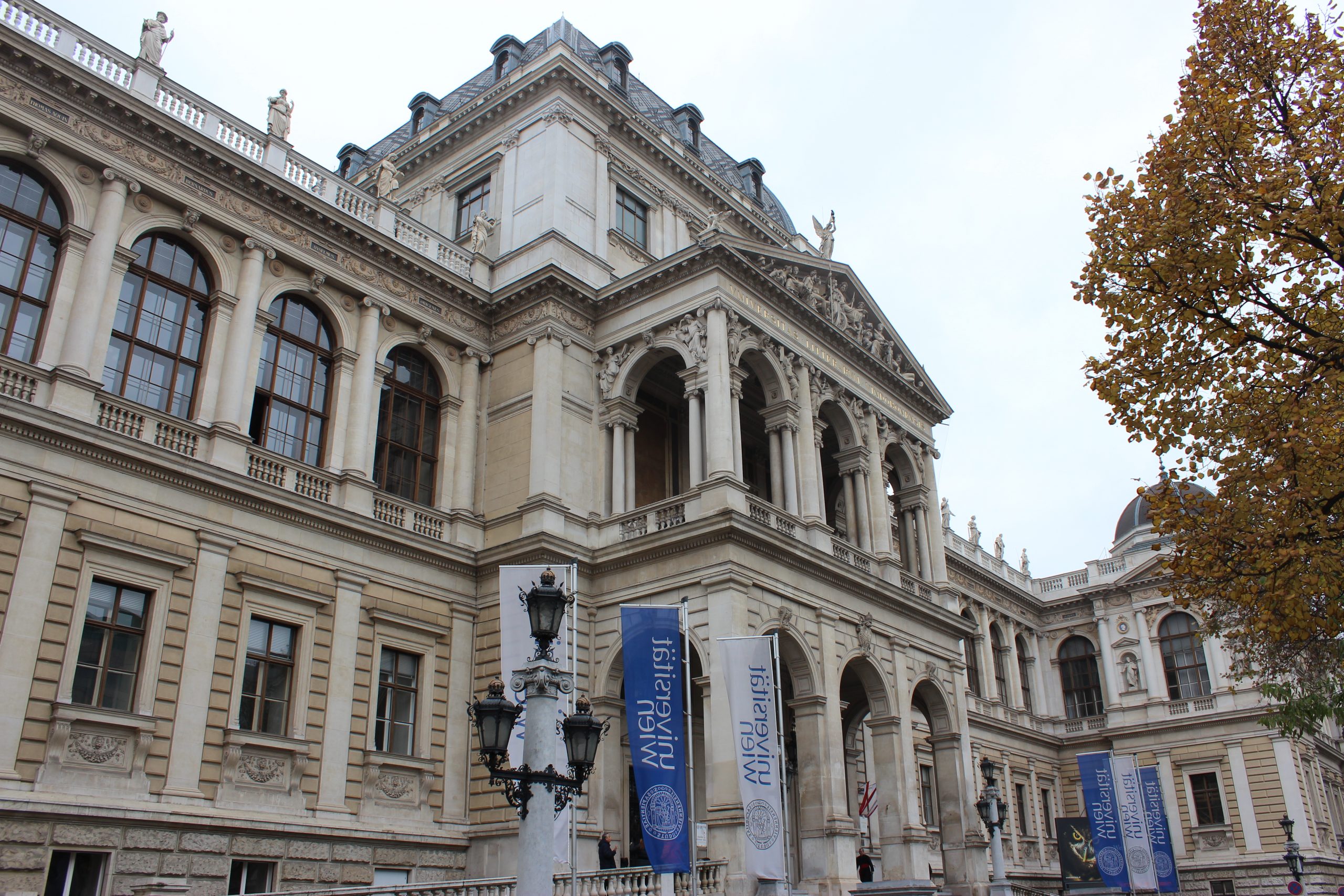
Earlier this month, I participated in a panel discussion at the University of Vienna on academic cooperation in a time of crisis.
Before the event, I spent time walking through the city. Vienna is a city of extraordinary culture, scholarship, and music. It is also a city deeply conscious of its history.
Just outside my hotel were several Stolpersteine, small brass plaques embedded in the pavement, bearing the names of Jewish residents who once lived there and who were later murdered during the Holocaust. One cannot walk far in Vienna without encountering reminders of lives interrupted, communities destroyed, and relationships severed.
For me, those reminders are not only about memory. They are also about responsibility.
They remind us that universities, scholars, and intellectual communities do not exist outside history. The choices we make about whom we engage, whom we exclude, and under what conditions we cooperate have consequences.
The subject of the Vienna discussion was not the past. It was international academic cooperation in the twenty-first century.
Yet the question remains relevant: how do we preserve openness, dialogue, and scholarly exchange during periods of political tension and conflict?
Early in my career, I applied to participate in an executive program at a British university. I was informed that I would not be admitted because of my Israeli citizenship. The director made that clear in writing.
More recently, after October 7, two colleagues of mine, one a senior university leader and the other a full professor of education, were disinvited from speaking at European institutions. The reason given was “security concerns.”
These incidents occurred decades apart and in very different contexts. Yet together they raise a broader question: Under what circumstances does political disagreement begin to shape academic participation itself?
This discussion is therefore not only about Israel. It is about the future rules of academic cooperation.
What is being tested in the case of Israel will not remain limited to Israel. We tend to treat this primarily as a political issue. I believe it is also a systems issue. If we get this wrong, we are not merely excluding one country. We are gradually rewriting the operating rules of the international academic system itself.
International academic collaboration is no longer filtered only by scientific excellence or feasibility. It is also being filtered through questions of legitimacy, reputational risk, and political defensibility.
That shift matters because it changes how the academic environment behaves.
For decades, international academic cooperation rested on a relatively stable assumption: that universities and researchers would primarily evaluate one another on the basis of scholarly quality, expertise, institutional capacity, and the likelihood of producing new knowledge.
That system was never fully apolitical. There have always been diplomatic tensions, regulatory constraints, visa restrictions, export controls, and political disagreements.
But what is changing now is where those frictions operate.
Traditionally, such constraints affected the implementation of cooperation. Today, they are influencing the selection of cooperation itself.
In other words, the question is no longer merely whether collaboration is possible.
The question is whether collaboration is considered acceptable. We see institutions and individuals asking not only: “Who is the best partner?” but: “Who is the safest partner?”
When I speak about “safe” partners, I am not referring to scientific quality.
Rather, I am referring to perceived institutional and political risk.
A consortium leader preparing a Horizon proposal may privately conclude that an Israeli researcher is among the strongest scientific partners available. Yet that same leader may worry that including an Israeli institution could generate controversy, attract additional scrutiny, complicate consortium dynamics, or reduce the proposal’s chances of success.
Whether those concerns are justified is almost beside the point.
The moment such calculations begin influencing partner selection, scientific excellence is no longer the sole criterion guiding academic cooperation.
Observers describe the resulting phenomenon as a form of “silent boycott”: not necessarily formal exclusion, but a distributed pattern of hesitation, disengagement, reputational caution, and informal filtering operating beneath official policy.
An academic environment that optimizes for safety does not behave the same as one that optimizes for excellence.
And we are beginning to see the effects.
A recent report by the Samuel Neaman Institute documented nearly one thousand boycott-related academic incidents since October 2023, including protests, petitions, institutional resolutions, disruptions of academic events, and growing pressure surrounding international research frameworks.
Importantly, some universities continue to avoid formal boycott declarations altogether.
The pattern is therefore not primarily one of official prohibition, but of informal filtering inside the cooperation architecture itself.
The erosion of academic cooperation rarely begins with formal sanctions.
More often, it begins with hesitation.
As one senior German academic leader recently observed, the challenge is often not the loud call for a boycott, but the quiet withdrawal from cooperation and social interaction. Some of the most consequential changes occur not through public declarations, but through countless small decisions made behind closed doors.
Recent documentation from Germany, including research associated with the Netzwerk Jüdischer Hochschullehrender, describes not only direct incidents of exclusion and intimidation, but broader institutional dynamics of avoidance: events quietly cancelled, collaborations reconsidered, and faculty reluctant to engage publicly with controversial subjects connected to Israel, antisemitism, or Zionism.
Concerns regarding antisemitism and exclusion within higher education are being recognized not only by Jewish organizations, but by governments, university associations, and policymakers across Europe.
What emerges is not simply polarization.
It is a form of reputational risk management shaping academic behavior.
The same dynamic is visible at the individual level.
Jewish and Israeli students and researchers conceal aspects of identity, avoid participation, or withdraw from academic and social spaces because of perceived hostility.
Once participation itself becomes conditional on how identity or affiliation is expressed, the environment begins to change even without formal rules.
I have spent more than three decades working in international academic cooperation.
Early in my career, discussions about partnerships were dominated by questions of excellence, complementarity, funding, capacity, and feasibility.
Today, questions of legitimacy and reputational exposure enter collaboration discussions much earlier in the process.
For decades, universities generally operated on the assumption that disagreement was compatible with cooperation.
Today, in some environments, disagreement itself becomes a reason to reconsider cooperation.
The problem here is not only Israel.
Israel is currently a visible and immediate case.
But it is not the endpoint.
Similar questions arise in relation to researchers from Russia, China, Iran, and elsewhere.
The circumstances differ, and the underlying political issues are not identical.
Yet the structural challenge is remarkably similar:
How can academic communities preserve openness, fairness, and scholarly exchange during periods of geopolitical conflict?
Once nationality, institutional affiliation, or political circumstance become primary criteria for participation, the issue extends beyond any single country.
International scientific cooperation does not require consensus.
It requires a willingness to engage with colleagues whose governments, societies, or political views may differ from our own.
Indeed, the ability to cooperate across disagreement has historically been one of the strengths of the scientific enterprise.
None of this implies that academic cooperation should continue under all circumstances or that universities should be entirely insulated from political realities.
The international debate surrounding South Africa during apartheid, and current discussions concerning Russia following its invasion of Ukraine, demonstrate that exceptional circumstances may lead scholars and institutions to reconsider existing forms of engagement.
The question raised here is therefore not whether academic cooperation should ever be affected by politics. Rather, it is whether nationality, institutional affiliation, or political disagreement are becoming routine criteria for participation in international science. Dr. Eric Zimmerman is the former Director General of the German-Israeli Foundation for Scientific Research and Development (GIF) and has held senior leadership positions at Reichman University and Bar-Ilan University.