
Fake, Fake, Fake
The direct link between superficial religiosity and the Iran disaster
Uriya Shavit
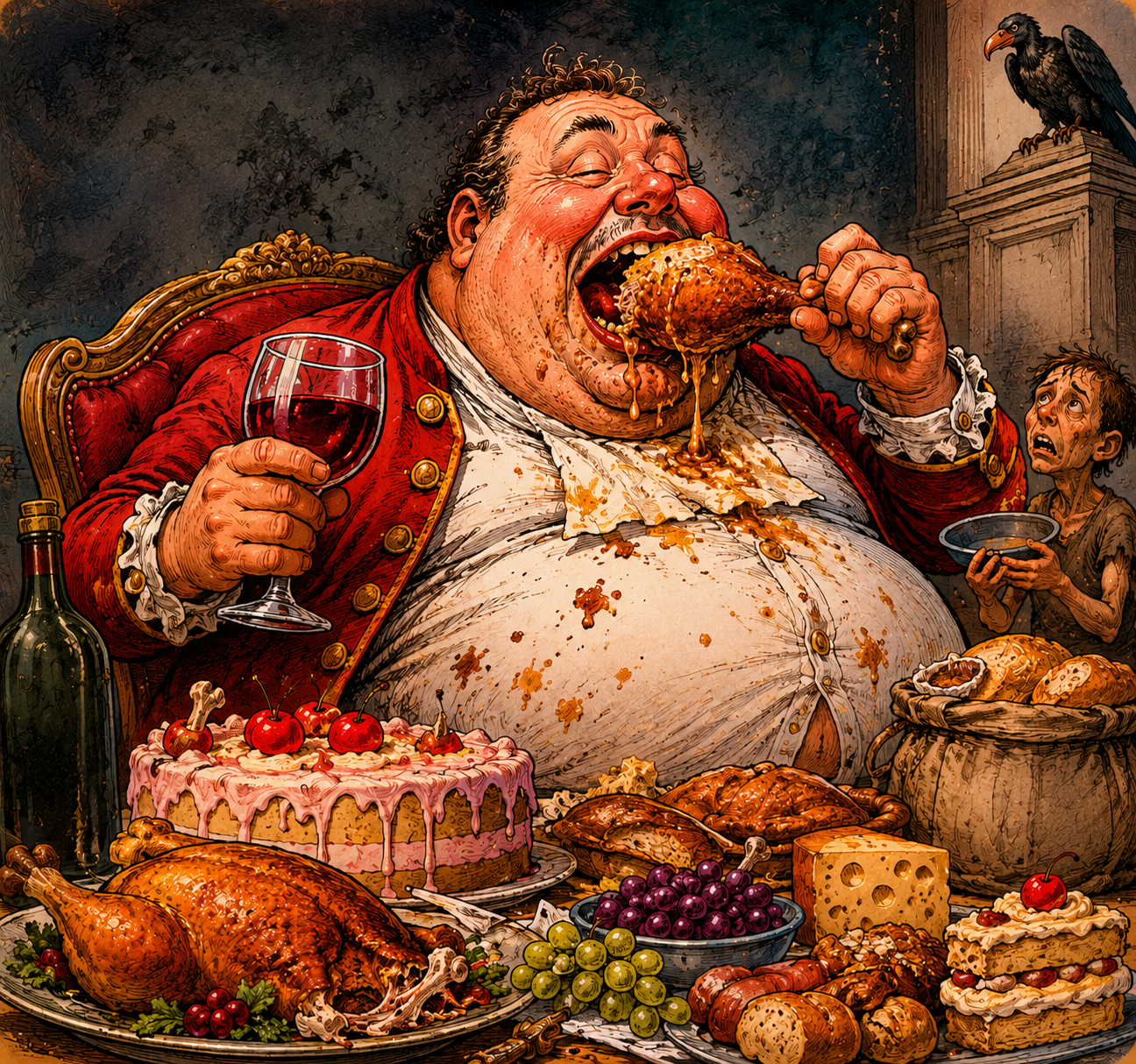
Donald Trump’s 2024 electoral victory owed foremost, as in 2016, to religious white Christian Americans. Seventy-six percent of that group who attend church weekly voted for him, as did 64% of that group who attend church a number of times a year. On the other hand, 56% of white Christian Americans who never or seldom attend church favored Harris.
Among Jews, the trend was even more distinct. Whereas approximately 70% of the Jewish American population voted for Harris, in some ultra-Orthodox-dominated areas, levels of support for Trump could make Hafiz al-Assad jealous.
Given how massive the support of white devotional America for Trump is, the superficiality of his and his subordinates’ approach to religion is striking.
Trump loved saying that the Bible is his favorite book. Still, at the start of his political voyage, he was embarrassed when asked to name a preferred verse, and recently seemed genuinely confused as to what is wrong with an AI Christ-likening of himself, as could only be a person who is not in the habit of attending church or art museums, or neither.
His vice president, J.D. Vance, who in 2019 converted to Catholicism, publicly criticized the Pope in a way more befitting, well, a Protestant.
Trump’s War Secretary, juvenile television anchor Pete Hegseth, confused a famous Pulp Fiction monologue with Bible verses.
Trump’s nemesis-turned-ally, the ever-righteous Ted Cruz, was unable to point to a verse that supports his belief in his duty as a Christian to support Israel.
What we have here are people with the appearance of religiosity, but arguably without its substance. Politicians who seem to be more bothered about seeming devout than about being devout.
It is not difficult for religious voters to justify voting for religiously flawed candidates. The easiest theological excuse is that God works in mysterious ways. It suggests that politics is a choice between alternatives rather than ideals, and that to promote religious values and interests, sometimes religiously weak candidates must be supported.
Yet given how central faith is for so many Trump voters, the shallowness of his religiosity and that of other top Republicans is troubling.
It is troubling because voters so indifferent to the gap between image and essence tell their leaders that they only care about the image.
Shallowness is contagious and dangerous.
There is a simple rule about excellence.
Spending 10,000 hours playing the violin does not guarantee becoming an internationally acclaimed artist. Spending 10,000 hours shooting hoops does not guarantee becoming an NBA all-star. However, not training and sweating guarantees achieving nothing.
Trump’s rise was boosted by the justified disappointment of many voters in the failure of complex and informed theories and policies to improve their lives. Sadly, while complex and informed theories and policies do not guarantee success, simplistic, vulgar, and instinct-based agendas guarantee failure.
Which is why Trump is failing on every front.
The Iran disaster is a tragic case in point.
There is a moral difference between failing in trying to do the right thing and failing in trying to do the wrong thing, and on Iran, at least, Trump tried to do the right thing.
Yet the bottom line is what really matters.
Not a single mistake was spared in entering a war that may go down in history as the signature of the decline of America as a global hegemon.
The first major mistake: ignoring voters. Trump forgot what elevated him to the national political stage in the first place. Like Barack Obama, Trump was one of the few American public figures who opposed the Iraq War in real time. Their ascendances reflected, respectively, a public sentiment that America is too bankrupt, tired, and divided to engage in new major armed conflicts.
Obama sugarcoated this realization in empty sophomoric peace speeches that, to his credit, at least aligned with the actual abilities of present-day America.
Trump, with his tough-guy rhetoric, kept sending the message that he’d go crazy if he didn’t get what he wanted here, there, and everywhere, while his adversaries knew that his country could not afford to walk the walk. Soon enough, Madman Theory stopped working, and all that remained was a mad man.
The second major mistake: ignoring allies. To have the upper hand in a conflict of global implications, any country needs international support. Yet in the months before the war started, Trump did everything possible to lose friends. The gravest mistake in this regard was to threaten, through 1930s-like rhetoric, to take over a sovereign Danish territory based on the argument that it was important for his country’s national defense.
By showing repeatedly his contempt for liberal values and international law, Trump – and America – became a hard sell as champions of a war for the sake of liberal values and international law.
His administration seemed completely oblivious to how despised and ridiculed it has become. J.D. Vance went to Hungary with the sincere belief that with a few smart words, he would propel Viktor Orban to an upset victory. The problem is not the arrogance; the problem is the detachment from political reality.
The third major mistake: ignoring precedent. Bringing down regimes through external intervention without a ground invasion is not impossible, but highly unlikely. To make it the ultimate criterion for success was utter stupidity. To then disclaim this fact as if Google does not exist is even more stupid.
The fourth major mistake: ignoring international news. The war in Ukraine showed that new technological innovations, foremost the usage of drones, reshape battlefields in ways benefiting the weaker sides. Trump’s contempt for the immense courage, sacrifice, and resourcefulness shown by the Ukrainian people provides a partial explanation for why he and his team did not anticipate the damage Iran, as weakened as its military may be, could inflict on American interests.
The strategic implications are catastrophic.
I would like to believe that sooner, very much sooner, rather than later, the corrupt, vicious, and savage Iranian regime would crumble.
Yet at this present point in time, the Islamic Republic is stronger than it was before the war started. Not only has it survived an American-Israeli plan to bring it down, it proved its ability to master a crucial waterway and decide the fortune of global markets.
Thanks to Trump, the evil oppressing mullahs have become a focal point of identification for so-called anti-imperialist regimes and movements around the world, while America let its rivals know that its cards have weakened, and that it is not even able to maintain a poker face.
Much of what was said here about the United States holds for Israel.
The war was a strategic gamble by Netanyahu. Related or not to his personal misfortunes, any war is. Yet given the price Israel will end up paying in American public opinion for his miscalculation, the gamble can only be judged as too daring.
One aspect of the failure is unforgivable.
For three decades, destroying Iran’s nuclear ambition was Netanyahu’s primary political mission.
For three decades, it was assumed that in the case of a full-scale escalation, Iran would drip Israel with missiles and engage in a war of attrition.
For three decades, it was therefore clear that in order to win a war against Iran, Israel must prepare for the attrition scenario.
Yet the country entered the war with its public schools and civilian aviation ill-protected for that scenario, which could have been at least partially avoided if more resources had been invested on time on those fronts. This negligence imposed on the Israeli operations time constraints that gravely impeded its strategic leverage.
This is a story of an over-ambitious and ill-conceived plan executed by a leader and a government carried away by their confidence in intuition and simplistic historical symbolic analogies.
The cabinet was fed by a miracle-bent ideological premise rich with poisonous supremacist religious sentiments disguised as strategic analysis.
The current Israeli governing coalition no longer describes itself as representative of the “national camp,” as the Israeli right did for decades. Rather, it is the voice of the self-described “faith camp.”
Yet what is the faith of this camp?
Its tribal campfire, Channel 14, established originally as a Judaism channel, offers very little religious instructional, cultural, or folk programs. Rather, it reinvented Judaism as a religion focused on trashing real and imagined progressive and liberal foes.
Not a few politicians of the “faith camp” have reduced Judaism to a message of vengeance, vulgarism, and territorial expansion.
Read the Haredi press; the General Attorney is broached there more than any sage is. The current-affairs columns have the sacredness of exemptions-culture as their main theme.
It is the conventional wisdom that, following October 7, 2023, Israel became more religious.
Nonsense.
Previous waves of religious awakening involved people who actually substituted one way of life for another. What we see in recent years is a consumerist and chauvinistic mutation of religiosity.
Instead of disciplined, laborious searches for a spiritual path, lazy cherry picking of folk rituals. Instead of God-fearing, modest attitudes and the relinquishing of indulgences, childish and greedy proclamations about a new kind of an Almighty who, no matter what, would always shower Jews with good and more and more good.
At its best, religion makes people humble yet determined, profound yet principled, ambitious yet down to earth, inspired yet rooted.
At its worst – well. Trump. Netanyahu. Orban. Look at them. Just look at them. I mean it in the politically incorrect way. If they are to open a Bible anytime soon, I highly recommend Deuteronomy 32:15.