Unsung Heroes
Maigun Solmunde brings to light the Faroese Saviours of Jews
Premton Asllani
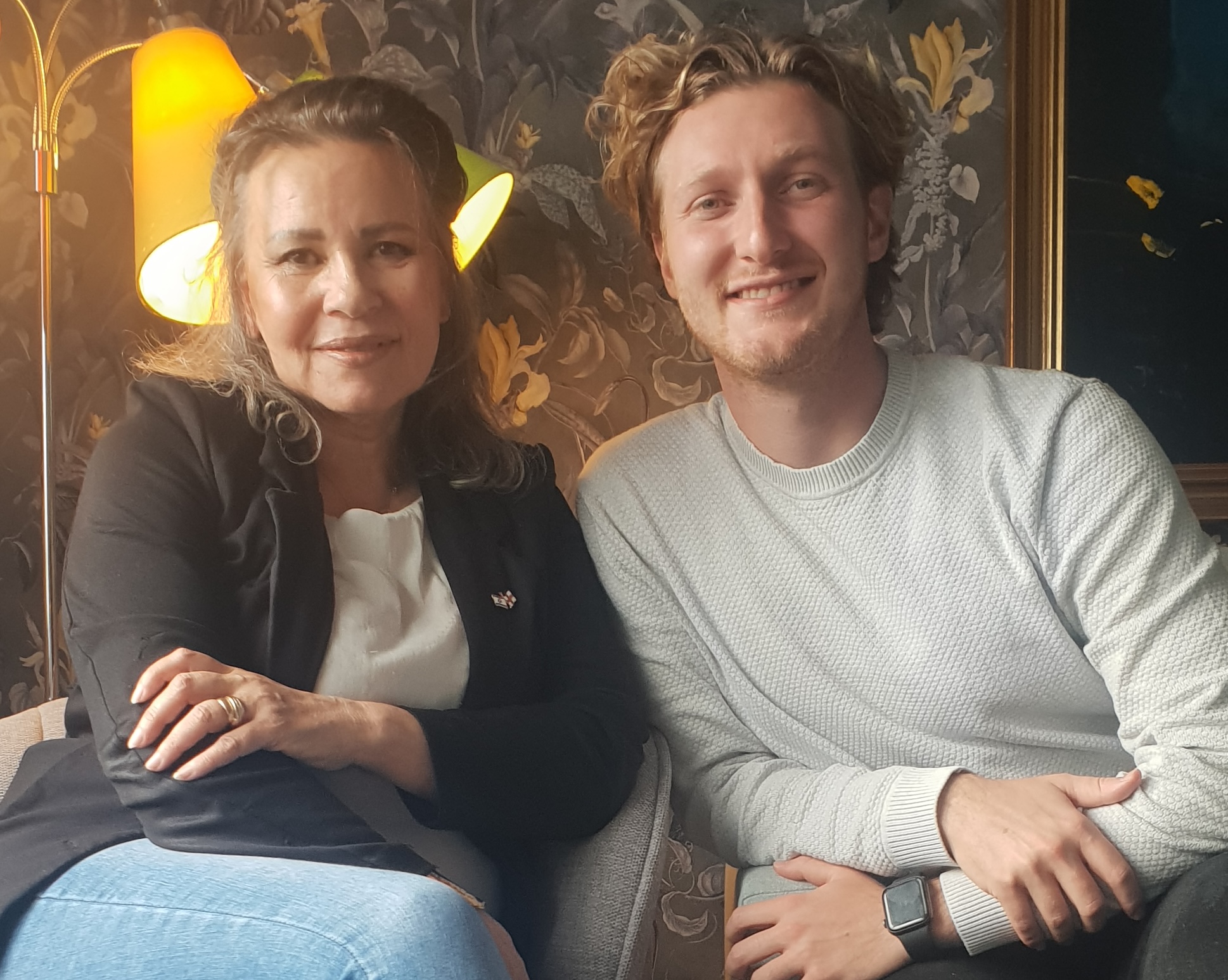
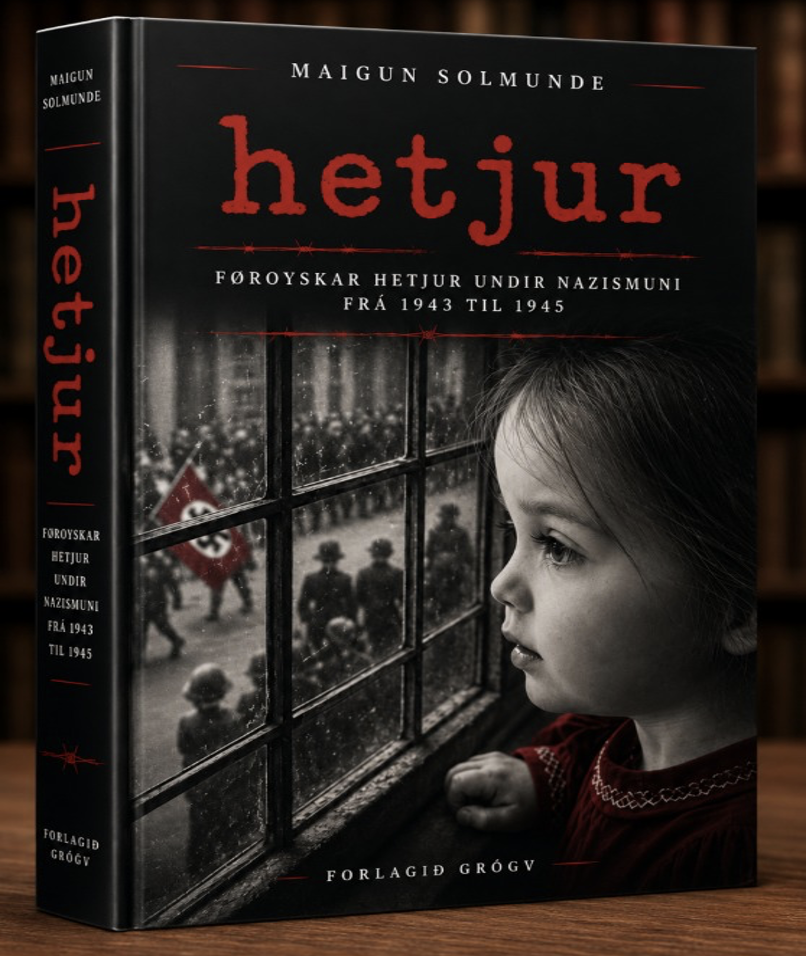
When I met Maigun Solmunde in her office in Tórshavn, her book about the righteous Faroese who saved Jews during the Holocaust was at the printers. Its title, “hetjur,” means “heroes” in Faroese.
She insisted on a small h, as a sign of humility.
Solmunde works in administration and accounting for the fishermen’s union of the Faroe Islands, an autonomous Danish territory, population of 56,000, located between Norway, Iceland and Scotland. She is also the founder and CEO of North Atlantic Travel, which organizes travel experiences across the Nordic region.
Yet her greatest passions are the Jewish people and the State of Israel.
Solmunde traces that passion to her childhood. Her mother, an evangelical Christian, discussed with her the Bible and books such as Mila 18 on the Warsaw Ghetto Uprising and Exodus on the foundation of Israel, both by Leon Uris.
Listening through the wires to news on the Munich Olympics terror attack and the Yom Kippur War deepened her interest. She first visited Israel with her family in 1992, and has returned 18 times since. Her first visit to Jerusalem “was like falling in love.”
Her independent study of Faroese who helped Jews survive the Holocaust was driven by a strong conviction that the story of those unsung heroes deserves to be told.
In April 1940, Germany occupied Denmark. Responding to that development, British forces rushed to take over the Faroe Islands to make sure the strategic location in the North Atlantic did not fall under the Nazis. Faroese people who were living in Denmark at the time found themselves cut off from home.
In October 1943, when the Nazis moved to deport Denmark’s Jews, a heroic rescue effort helped about 7,000 Jews to flee from the country and find shelter in neutral Sweden.
Among those who helped were Faroese residents.
Solmunde had long heard about one of them: a captain from a tiny village who ferried Jews to safety by the name of Marentius Poulsen.
During a visit to Yad Vashem, she mentioned his name and story to the group she guided.
A woman spoke up: “He was my grandfather’s brother.”
That link was all that Solmunde needed. She searched archives in Denmark and Sweden, contacted additional relatives, and recovered a radio interview with the captain’s wife recorded in the early 1990s.
According to Solmunde’s research, Poulsen helped 64 Jews escape the Nazis. He accepted no payment. His wife’s recorded testimony described a man whose Christian faith shaped his sense of duty.
“This captain said that according to the word of God, he had to do it,” Solmunde said.
Poulsen’s underground efforts continued also after the main Jewish escape operation. He transported resistance members to Sweden and smuggled weapons back to Denmark.
Following his arrest by the Gestapo, he was sent to a prison camp at the Danish border with Germany. Along with seven other underground heroes, he was chosen to be executed by order from the Gestapo commander in Denmark, Fritz Bolle, who was known as exceptionally brutal even by the evil standards of the Nazis.
Another story of rescuers Solmunde traced had a happier ending.
When the Jewish Stohn family fled Denmark for Sweden, they had no choice but to leave their seven-month-old baby Carsten behind. They entrusted the baby with the Faroese i Dali family, who rented rooms in their house.
The i Dali had a four-year-old daughter, Unnur, who used to play with the Stohn’s elder boy. After his escape, she helped watch his baby brother.
Solmunde described how the Germans watched the house, which they knew belonged to a Jewish family. Before the Faroese mother took the baby outside in his pram, her daughter checked whether it was safe. “It’s all clear, we can go out now,” the girl would tell her mother.
After several months, Carsten was taken by boat to reunite with his family in Sweden by the brother of the i Dali father.
Finding the rescued baby decades later was not an easy task, in part because Solmunde mistook the surname for “Storn.” After a rabbi in Copenhagen informed her about the correct name, she began making phone calls again. This time, the man answering the telephone was Carsten.
She arranged a reunion between Carsten and Unnur. They met in Gilleleje, a fishing town on the north coast of the Danish peninsula North Zealand. Both were by then old, and they embraced.
“It was very emotional,” Solmunde said.
I asked her why Faroese people risked their lives for Jews who were not family or close friends.
Solmunde pointed to the Christian traditions of the islands. She described communities accustomed to praying before going to sea, and parents who read their children portions from the Bible.
I pressed her on this point. Many Europeans were well versed in the Bible, and most of them remained indifferent in the face of evil.
“It’s just a guess,” Solmunde acknowledged.
Solmunde hopes her research will endow the forgotten righteous with the recognition they deserve at Yad Vashem. She had already submitted documentation.
Her immediate objective, however, is closer to home: she wants Faroese people to know the stories of the rescuers, for children to learn about them at school. That is why she chose to write her book in Faroese.
She financed and published the project by herself. “I wanted it to be all mine,” she explained. She does not wish to be part of a memory organization or advocacy group directed by others; she prefers to remain, as she put it, “like a satellite.”
The sun came out above the tranquil, colourful harbour of the Faroese capital.
“I knew that if I didn’t write the story of the Faroese rescuers, they would never be written and would sink into oblivion,” said Solmunde.
Whether with a small or a big h, she is also a hero in her own way.