
The Haddad Delusion
An embattled candidacy exposes Israel’s blindspots
Uriya Shavit
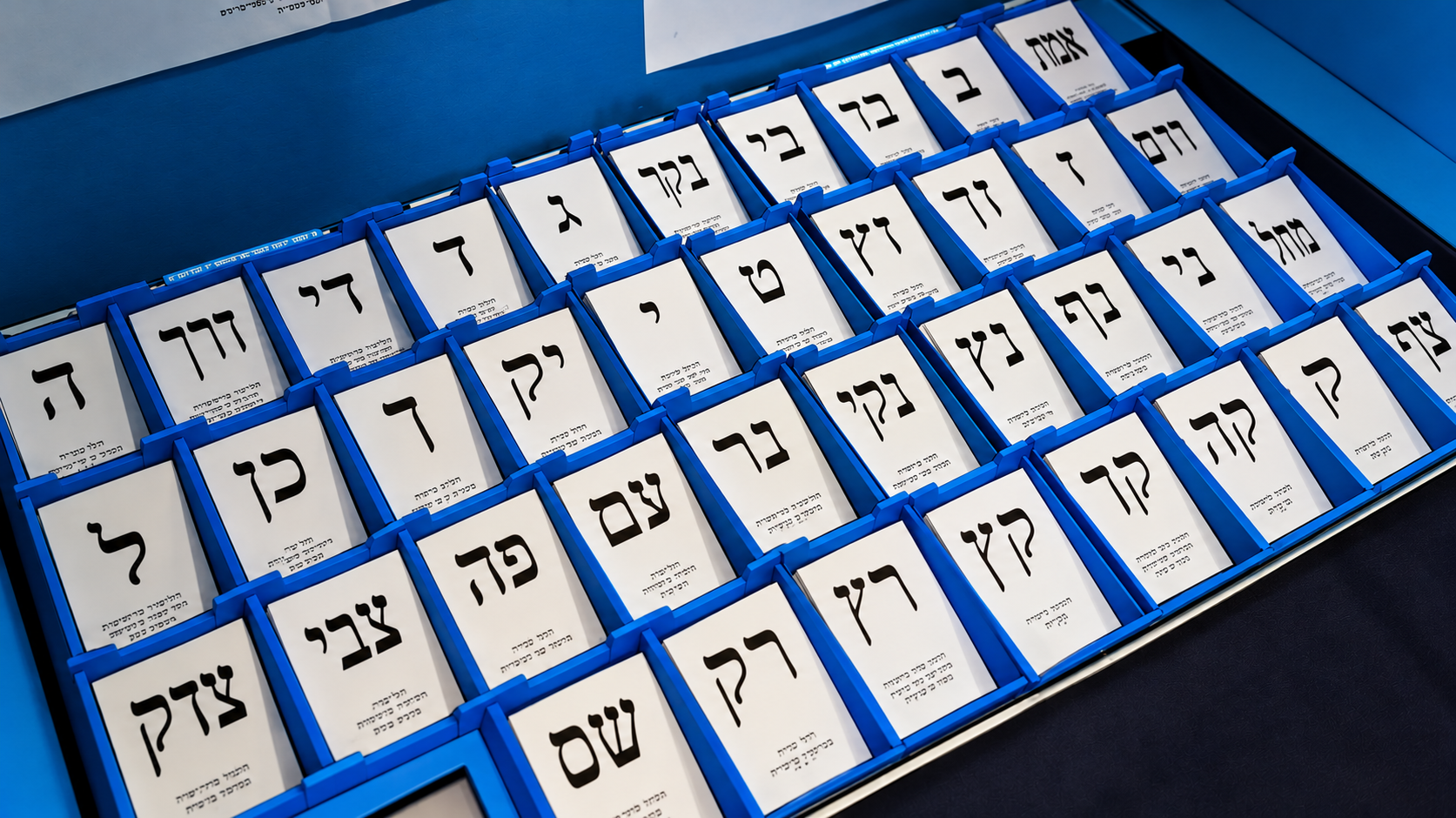
Israel is heading to the polls following a sleepy election campaign in which its entire political spectrum did nothing but avoid inconvenient truths.
Close to 50 percent of Israeli first-graders study today in anti-Zionist or non-Zionist schools. Well before the end of the century, Israel will have an anti-Zionist majority. Not a single political party or candidate candidly engaged with this prospect of doom and offered practical remedies.
Israel – the state, not its government – is at its worst standing in the international community ever. Its enemies, and they are many and sophisticated, are delegitimizing not just its policies, but also its right to exist. Once marginalized haters have entered the mainstream. For the first time in history, more Americans support the Palestinian side in the conflict than the Israeli side. The alarm bells are ringing. Nothing short of a new and audacious diplomatic plan could change the trend. Yet for an entire campaign, the main candidates, right, left, and center, failed to introduce one.
No candidacy reflects the prevailing spirit of national delusion better than that of Yoseph Haddad.
Haddad is a person with his heart in the right place. A charismatic young Israeli Arab Christian, who volunteered to serve in the Golani Brigade, was severely injured in battle, and became a household name in the aftermath of the October 7, 2023 Hamas attack after passionately and relentlessly advocating for Israel.
He is running for the Knesset as the No. 2 candidate in a new hawkish party, Amcha Israel, that advances the somewhat contradictory message that Benjamin Netanyahu is a failed prime minister, and that he must thus remain in power. Haddad’s main promise is to change Israel’s international status through vigorous public diplomacy. The party is struggling to pass the 3.25% threshold and is facing heavy pressure to withdraw from the race.
Unfortunately, both Haddad’s immense popularity across Israeli society and his failure to transform it into prospective voters reveal how addicted Israelis have become to deluding themselves.
Haddad has often been described as the most effective speaker Israel has on the international stage.
Alas, he is not.
Henry Kissinger famously remarked that Israel has no foreign policy, only domestic politics. Israeli public diplomacy often follows the same pattern. Much of it is actually intended for internal consumption; to make Israelis feel good about themselves.
Haddad is a case in point. His media appearances and public talks have impressed some Israelis and die-hard supporters of Zionism, but he is not effective elsewhere. His aggressive manner, self-righteousness, and dismissiveness of other views do not serve well the image of a country accused of being aggressive, self-righteous, and dismissive of other views. He is too often either too eager to please or too combative.
Shifting from farce to grotesque, he is currently under indictment for a reckless act with a weapon in an alleged case of road rage. That does not make him the ideal speaker for a country accused of committing such acts, only on a massive scale.
None of this actually matters, because even if Haddad were the reincarnation of Abba Eban, he would not be able to sell the unsellable. Failed public diplomacy is not the reason why Israel’s image has sunk so low since October 7.
I still think, as I did the day after October 7, that the only long-term solution for Gaza is a temporary Israeli military government there.
Yet Israelis who compare Gaza of 2023 to Germany of 1945 should keep in mind that the long-term objective of the Allies was to prepare West Germany for democratic independence, not to establish American settlements there or expel the local population.
Other than in Israel and a few rapidly diminishing evangelical and populist quarters, there are no supporters on the world stage for the diplomatic agenda of the current Israeli government. Haddad is probably acquainted enough with international politics to realize why it is essential to offer some prospect – even if remote – for peace that is not based on fanciful plans of annexation or “voluntary emigration from Gaza,” but he is too inward-looking politically to speak in kind.
Peace plans are not what most Israelis want to hear about at the moment, and for more than understandable reasons. Yet the difference between leadership and TikTokship is telling your public what they do not want to hear.
Then there is the delusion of the mentality-argument.
Haddad has been one of the vocal advocates – with greater credibility, due to his ethnicity – of the school according to which Israel’s troubles in the region are the result of a lack of understanding of “the Arab mind.” That Israelis must “speak the language of the region” to survive.
This approach has become very popular with the IDF, which, following October 7, 2023, convinced itself it had failed because of a lack of familiarity with the nuances of Islam.
The state of Arabic and Islamic studies in Jewish society is indeed shameful, but that is not why Hamas surprised Israel.
While the ideology of Hamas and its understanding of sharia made lasting peace with Israel impossible, they did allow for long-term periods of quiet. The conception upon which Israel based its policies before the war did not result from failure to read Islamic texts.
Israel did not sleep on October 7, 2023 because of a shortage of knowledge about Islam, but because its political and security leaderships got so addicted to the status quo that they deluded themselves that its continuation was the only possible scenario. Israel did not sleep on October 7 because it did not “speak Arabic,” but because it adopted elements from the political vocabulary of the Arab world, including confusing words for action, confidence for arrogance, and bravado for courage.
The “knowing the Arab mentality” argument implies another delusion: that the campaign in Gaza was not sufficiently aggressive.
I am not familiar with a military doctrine according to which 70,000 casualties within a population of two million indicate moderate action. I am equally not familiar with the existence of an American administration or public that would accept doubling that death toll.
The greater delusion of all goes to the heart of what Haddad’s public persona represents.
Haddad appears to genuinely believe that his candidacy as an Arab citizen who is a passionate Zionist is a breath of fresh air that charts a new path for the future of the Arab minority.
It is, in fact, a regression.
In the first three decades of statehood, Arab-Israelis who toed every mainstream Zionist talking point dominated the Arab electorate. It is hard to believe, but in 1963, it was two Arab MKs who provided the crucial votes to scuttle legislation advanced by Menachem Begin and others and intended to end the military government that was in effect in Arab towns and villages.
The change toward more independent politics occurred, in part and to some irony, because the Arab minority became more integrated and confident that democracy in Israel is real.
Much has been achieved, yet some prevailing premises have not really changed.
One is a patronizing point of view that regards Israeli Arabs as guilty until proven innocent, as conditional citizens.
Another is a patronizing point of view that leaves Israeli Arabs with two options only: submissively parrot whatever the mainstream of the Jewish majority says, or be labeled as terrorists.
Haddad is aware that there is still a long way to go. Last year he starred in a comical sketch in the popular show Eretz Nehederet, where, at the Ben Gurion Airport, he was at the same time admired by security officials for his public diplomacy and disrespected and humiliated for being an Israeli Arab.
As a politician, Haddad chose to act funny in a different way – pretending that patronization, discrimination and racism exist only on so-called extremist margins.
When rabbis questioned whether an Arab like him should have a leadership position in Israel, he chose not to quarrel with them, instead directing his raging fire to the Israeli left.
It did not help him. With his party understood as an electoral threat to the Likud-Settlers-Haredi coalition, he was quickly relegated to the status of the Arab whose loyalty is questioned.
Haddad thought that the Israeli right recognized him as a true, equal partner. That if he aligned with every rightist nationalistic trope, he would get every bit of rightist, nationalistic legitimacy. Instead, he learned that whatever test of loyalty he passes, another one would be introduced.
Even that did not stop him from continuing to sell the fantasy of Arab Zionism as a real prospect.
The vast majority of Israeli Arabs are not Zionists and it is foolish to expect them to become ones. Doing so would only kill the emergence of pragmatic, constructive worldviews that navigate the common Arab interpretations of 1948 in ways that allow for joint existence and civil patriotism.
A ridiculous cliché repeated by Israeli-Jewish politicians and journalists is that the Arab parties do not represent the Arab public (the same is often said about the Haredi parties).
By definition, the parties for which a public votes, let alone repeatedly, represent that public.
Haddad said he would win his party two Knesset seats through Arab votes. That’s about 80,000 votes.
He will not.
One thousand votes is a more down-to-earth prediction.
According to the polls, there is more than a 50% probability that come October 28, Haddad will be awakened from his delusions. Sooner or later, Israeli society will also have to wake up.