
Interview: Down Under
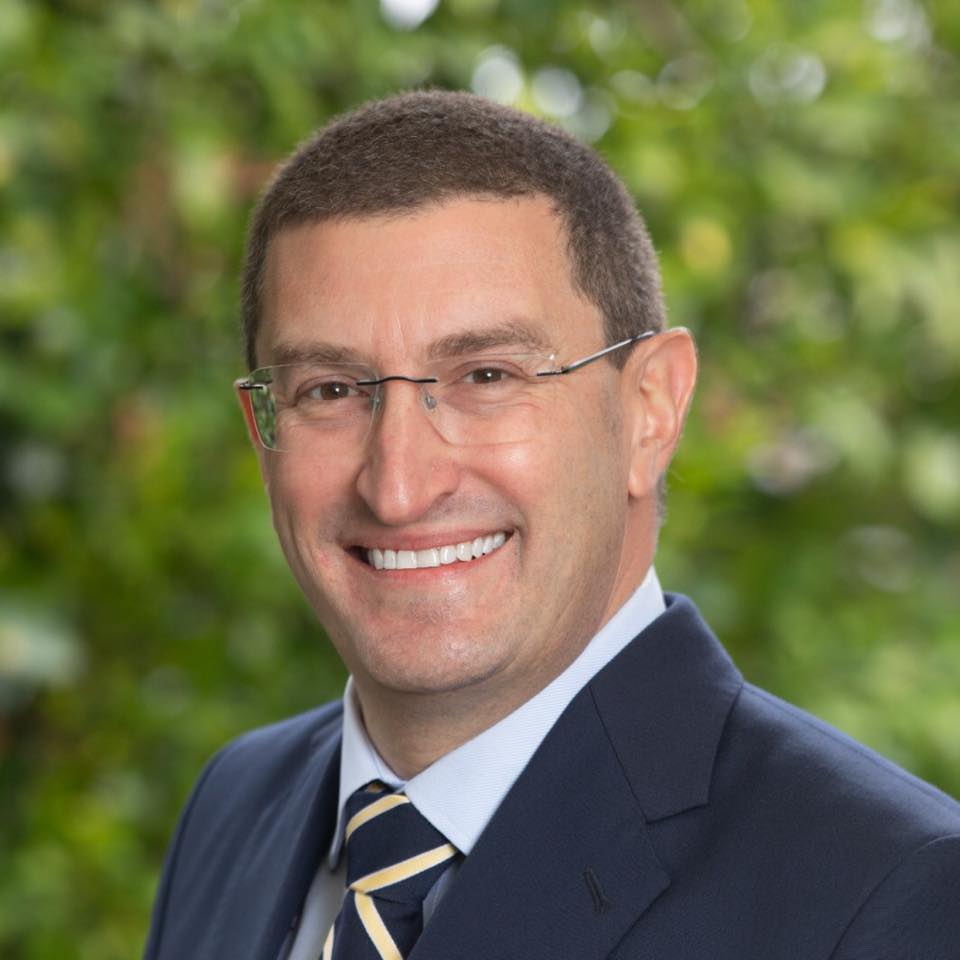
According to the polls, by June, Australia is likely to have a new Government with the leader of the Liberal Party, Peter Dutton, as Prime Minister. Dutton asked MP Julian Leeser, former shadow attorney general, to discuss with the editor-in-chief of the Report, Prof. Uriya Shavit, the reasons for the rise of antisemitism in Australia – and how a Liberal government plans to combat it
Prof. Shavit: Is there any intelligence to support the claims that foreign actors were involved in the wave of antisemitic incidents that Australia has witnessed since the October 7 attack?
MP Leeser: I think the Australian Federal Police have said this, the state police have said this, and some government ministers, including Prime Minister Anthony Albanese and others, have expressed concern about foreign actors. It was actually the Commissioner of the Australian Federal Police, Reece Kershaw, who raised this issue in a news conference last year after the Adas Israel Synagogue bombing in [December 2024 in Melbourne]. He first raised the prospect that there were potential foreign actors involved in the antisemitic attacks.
Is it Iran? Is it some of the other countries that have an interest in disrupting Australia and its social harmony? Is it Russia? Is it the PRC [People’s Republic of China]? There’s been no concrete evidence of any of that.
The most recent incidents, including the firebombing of a childcare center in [Sydney, January 2025] and attempted arson, appear to have been the work of hired criminals. These individuals used antisemitism not for ideological purposes but simply to cause disruption. In fact, there is a suggestion that the kingpin financing these crimes wanted these incidents to occur as a way to influence a potential sentence he is facing.
Prof. Shavit: So why target Jews?
MP Leeser: I can’t answer that definitively. I could speculate that it’s because of the increasing antisemitic incidents in Australia since October 7, particularly in December 2024, with the firebombing of Adas Israel and the firebombings of cars in Sydney and Melbourne. This is just adding fuel to the fire and causing further panic.
Prof. Shavit: Were you personally affected? As someone who frequents a synagogue?
MP Leeser: Yes. My conception of being a Jew in Australia has always been one of security. Jews have been in Australia since the First Fleet, and this is one of the few countries on Earth where there has never been state-sanctioned discrimination against Jews. Despite our small numbers, Jews have succeeded in every imaginable field. Australia has been uniquely welcoming to Jews. Australia took more Holocaust survivors per capita than any nation other than Israel. The Jewish community is generally well-liked.
This recent surge in antisemitism has shocked everyone and rocked our sense of what it is to be a Jewish Australian. When Adas Israel was firebombed, it deeply affected me. It was probably the first time I cried during this entire period.
My family came to Australia in 1849 to build a synagogue in Adelaide. Seeing a synagogue attacked in 2024 was something I never expected. The sense that, you know, we’ve gone from a country where my family came to build synagogues to a country where they’re burning synagogues. The images of the firebombing looked like something out of a Holocaust film or Kristallnacht, not something you’d ever expect to see in Australia.
Jews in Australia are now more concerned about their personal security. People are discussing making aliyah. Security has increased around Jewish schools and communal institutions, and people are paying more attention to security at their own premises and homes.
Prof. Shavit: Are you – plainly put – afraid for your safety now?
MP Leeser: No, I’m not afraid, but I am more conscious of security. We are taking more precautions than we otherwise would have.
Prof. Shavit: Your party published an action plan in January, calling for more severe penalties for antisemitic crimes.
MP Leeser: Since then, some of the items in our action plan have actually been made law, particularly regarding mandatory minimum sentences and hate crime legislation we forced the government into backing. In fact, the most shameful minister in the government, in my view, is the Attorney General, Mark Dreyfus, who is actually Jewish. He has dragged his heels and opposed much of this legislation, but the Prime Minister ultimately forced him to support it.
Prof. Shavit: Your party is unique, perhaps in the entire history of democracies, in having a candidate for Prime Minister who is a former police officer. That is why I was all the more disappointed that the action plan did not emphasize the need for more policing.
MP Leeser: What we have said very clearly in relation to policing is that we will direct the Australian Federal Police, the AFP, in two ways.
Firstly, we are going to put together a multi-unit task force. Unlike what the government has done – just relying on the AFP itself – there is a real issue with coordination between the AFP and state police. Additionally, there hasn’t been enough input from security agencies, such as our domestic security agency, ASIO, or the financial transactions authority, among other security agencies.
Secondly, we will direct the AFP to prioritize dealing with antisemitism. That is, in terms of police responsibilities, us saying to the police: this is the first order of business.
But indeed, if you were to say to me, “Look, we’ve seen this [policy] here or there, and it has had a greater effect in terms of getting arrests and prosecutions,” I’m all ears. Because not only do I, as a Jewish Australian, take this seriously, but my leader does as well.
And the shameful thing for both the federal and state governments is that it really took the firebombing of the Adas Israel Synagogue for them to start making arrests and setting up police operations.
We argued – when I say “we,” I mean the opposition, the party led by Peter Dutton, and the Jewish community – that there should have been arrests on the 8th and 9th of October 2023, both the hate preachers in Western Sydney who called October 7 a day they had been waiting for and the protesters at the Sydney Opera House. Everything that has occurred since then has been a direct result of the government’s failure to set boundaries and strictly enforce them.
Prof. Shavit: You are predicted to win the elections.
MP Leeser: We are doing better in the polls, and we have a chance of winning, but history is against us. There hasn’t been a one-term government in Australia since the Great Depression.
But one of the reasons we are in a strong position is that ordinary Australians look at the level of crime, particularly antisemitic crime, and feel that the government has lost control of our streets.
This issue has been particularly frustrating because both the opposition and the Jewish community have been calling on the government to take action for 18 months. When the government finally set up police operations at both the state and federal levels, it did make a difference and helped stem some of the crime; but it came very late. The measures had to be quite significant and extreme because they had allowed the situation to spiral out of control.
For example, in New South Wales, state police have deployed helicopters over Jewish suburbs. There has been a significant increase in police presence; it’s almost like being in a police state in areas with high Jewish populations. These measures became necessary because, night after night, there were firebombings, mass graffiti attacks, and other incidents.
Prof. Shavit: But why were they so slow? Obviously, the Prime Minister isn’t antisemitic. So why?
MP Leeser: So, in the Labour Party, it’s different from the Prime Minister and the state premier. But let’s just focus on the federal political scene. The Labour Party is wedged in two ways. Firstly, it’s competing with the extreme left Greens vote in the inner cities for who can be the most woke and anti-Israel. And then, in Western Sydney, the seats there are large Muslim constituencies.
Indeed, some of those Muslim constituencies have been so upset with the way in which the government is seen to have [supported] Israel that they have set up their own party, called The Muslim Vote, to challenge sitting Labour MPs. So, the government is wedged on both sides and therefore, they responded to the whole event – the whole events of October 7 and, indeed, the antisemitism that followed – with a lack of moral clarity.
They couldn’t mention antisemitism without also mentioning Islamophobia. Now, Islamophobia is bad, and when it occurs, it needs to be called out. I have called it out both before and after October 7. But there was only one community that was in the gun from October 7, and that’s been the Jewish community. So there’s been a failure to recognize that.
Secondly, I think there’s been a failure to properly understand what my leader understands, what my party understands, and what our community understands: that you have to crack down on this early and hard because we’ve seen it all before, and we know where it goes. I don’t think he [Prime Minister Albanese] has any sense of that. His affinity is not with the Jewish community.
He was a pro-Palestinian activist for many, many years. He’s been in Parliament since 1996, and even as late as the mid-2000s, he was still attending pro-Palestinian rallies. [Still, when ] the Greens in his own constituency started to move pro-Boycott, Divestment, and Sanctions resolutions, to his credit, he fought some of those within his own local council in his electorate. But his natural sympathies are not with the Jewish community. He’s not an antisemite – I don’t think he’s that – but he doesn’t wake up in the morning with an innate understanding of who we are and where this goes.
And I think, you know, for the last 20 years, there has been, within the Labour Party, an increasing number of increasingly anti-Israel resolutions passed through their conference. The political philosophy of the Labour Party at the federal level is very hostile to Israel, and that hostility has ended up going hand in hand with hostility toward our community.
Prof. Shavit: Let’s say someone vandalizes a synagogue. And let’s say, hypothetically, it’s not because that person is an antisemite. What difference does it make? It’s still a criminal offense.
MP Leeser: That’s right. The federal police used a very unhelpful phrase when they spoke about those Sydney January incidents. We called them a terrorist event. I was one of the first people to call them a terrorist event because I think they met the definition of terrorism.
But the state police [in New South Wales] said it wasn’t a terrorist event. Instead of doing as you suggested and calling it a criminal event, they called it a “hoax.” And when you call an event like that a hoax – when it involves our community – you couldn’t have chosen a poorer word.
That’s because it downplays what was a very serious incident that caused the same amount of fear as a declared terrorist event would have.
There are people who just don’t get it.
Prof. Shavit: Or they pretend not to, which is, in a way, worse.
MP Leeser: No, I think they genuinely don’t get it. I think there are ministers in the federal government who do get it, but they are deeply conflicted because of their own constituencies.
Prof. Shavit: Because we see similar trends in Canada – similar failures of appropriate treatment by law enforcement…
MP Leeser: And universities.
Prof. Shavit: It makes me wonder whether the problem is that those two countries – Australia and Canada – have unresolved issues with their own colonial legacies, and Israel becomes a convenient deflection for some people.
MP Leeser: Look, this woke philosophy has spread through universities from the United States to Canada, and the USA is not much better either. These societies, Australia, Canada, and the USA, were all British colonies.
Within academia, starting in America and unfortunately spreading elsewhere, this narrative has emerged about power and privilege; the idea that you’re either born with power, or you’re not. The worst kind of privilege is white privilege. And the easiest way to start dismantling white privilege is by targeting Jewish privilege.
So, yes, that sick philosophy is definitely being taught in universities. But it’s not the only reason for what’s happening.
I think too few people recognize patterns in history. When you’re in the bubble, it’s easy to think everyone thinks like you. But they don’t.
The Shoah is such a key event for the Jewish people, and we’ve tried for a long time to engage in Holocaust education in this country, as they have in Canada and the USA. But clearly, it’s not enough. People do not recognize the broader tropes of antisemitism, its conspiratorial nature, and the cyclical patterns it follows.
And then, the anti-Israel activity on university campuses is just the modern manifestation of antisemitism.
Prof. Shavit: It’s ironic, though – having Australian college students condemn Israeli “colonialism.”
MP Leeser: Yes, of course. The Israelis fought the British. They are the last people who should be called a colonial power.
Prof. Shavit: Australian soldiers helped take over the land from the Ottomans.
MP Leeser: Including my great-grandfather. So yes, there’s an irony there. But I don’t think we should overplay it [when discussing the reasons for antisemitism in Australia].
It’s part of the explanation for what’s happening in academic circles. But more broadly, I think it’s a failure to recognize history, a failure of moral clarity, and a failure to crack down on extremism early.
We’ve been asleep at the wheel. Not just Australia, but the Jewish community more broadly. While we’ve been complacent, our strategic adversaries, both domestic and international, have become much more organized.
Prof. Shavit: Students of history who watched the Trump-Zelensky meeting were reminded of 1938. And very troubled. Do you share that sentiment as a party or as an individual?
MP Leeser: Well, look, the first thing to say is that when we were in government until 2022, Australia was the largest non-NATO financial contributor to Ukraine. We gave them Bushmasters, sent financial aid, and strongly supported President Zelensky. We’ve been very critical of the current government because it has failed to send munitions, failed to reopen the embassy for two years, and, despite Ukraine freezing, failed to send coal, even though we have large coal deposits. Again, this is due to internal domestic political reasons.
Now, suddenly, the Prime Minister is talking about committing troops to Ukraine, but many on my side don’t take him seriously. He has dragged his feet on everything else. If troops were sent, they wouldn’t be engaged in peacemaking or peacekeeping.
That being said, most Australians, both on the right and in the broader community, see Ukraine as the front line in the war on Western civilization. What baffles me is that some of those same people don’t see Israel as the front line, too. That disconnect makes no sense to me.
The bipartisan disgust [we have] for Putin, particularly in relation to Ukraine, is partly due to the 2014–2015 downing of a Malaysian Airlines flight over Ukraine by Russian forces. Many Australians were on that flight, which adds another dimension to our view of Putin.
The Ukrainian community here is relatively small, about 40,000 people, but I always contrast their activism with the pro-Palestinian protests. Both groups want to influence foreign policy. The Ukrainian community organizes concerts, holds public meetings, and earns respect. Meanwhile, the pro-Palestinian protests are violent and call for people’s deaths.
Prof. Shavit: That’s a very good point. No one ever thought to attack an Orthodox church because of what Russia is doing, or a mosque because of what Iran is doing, yet somehow, people take it as a given that synagogues are attacked because of what Israel is doing.
MP Leeser: Exactly.
And that’s the key point. The events of this summer have shown that the rise in antisemitism in Australia wasn’t just a reaction to October 7; it merely provided an outlet for something that was already there.
Again, the government’s response has been utterly inadequate. Instead of cracking down hard and early, law enforcement stood by. In my state, the police literally escorted protesters from one end of the city to the Opera House while telling Jews not to enter the city that night. Law-abiding citizens were not protected.
Prof. Shavit: Are people actually making aliyah, or just considering it?
MP Leeser: People are seriously discussing it. It’s not a mass exodus, but no one wants to be the last one left.
Prof. Shavit: I am reminded of a famous front-page headline, although with regard to a potential Labor victory in another country.
MP Leeser: Do I think this is the most consequential election in my lifetime? You’ll think, “Oh, I’m just a shill for my side of politics.” But if you talk to other community leaders here, they will say the same thing. I think if Labour is returned, and this is the key thing to know, it won’t be returned in its own right. It will end up being in a coalition with the Greens and some independents, which we call the TEALS because they wear teal-colored clothing. Many of them, though not all, are hostile to Israel, even though they now represent seats with significant Jewish populations.
Prof. Shavit: Contrary to the common perceptions, there wasn’t an increase in the number of antisemitic incidents in 2024 compared to 2023 in all Western countries, but Australia “shines with shame,” if I may use that phrase.
MP Leeser: It shines with shame. It shines.
Prof. Shavit: And it’s not a country associated with intolerance.
MP Leeser: No, it really isn’t. But we had appalling incidents. The university vice-chancellors, really, they are among the worst people. They just wanted to wash their hands of this, to keep the peace.
And there are things the Prime Minister said, like on October 10, 2023: “We stand by Israel. Always will.” And yet, you know, the underfunding.
The Foreign Minister here, Penny Wong, is just sinister. The fact that she went to Israel and didn’t go south [the Gaza Border]. The fact that she compared Israel with Russia and China.
The leadership of the far left in this country has so much to answer for. We believe it is this leadership that has given a sort of wink and a nudge to people who want to do bad things.
You know, I wore my kippah in Parliament for a week in 2023 because school students felt uncomfortable wearing theirs.
One of the things I did this year was write a letter to Jewish school students going back to school because I just wanted them to know that they need to crack on with their studies, and that, you know, we’re going to do our best to deal with these issues and so on.
And my big focus has been dealing with antisemitism on campuses because it’s all about the future of the country. It’s about, you know – can they enjoy the Australia that we’ve enjoyed? And that’s what I want them to do, and that’s what I’m working to achieve.
You know, I love Israel, I want to be there, I love going, and I support it very strongly, but I want to live here in Australia, and I want my kids to have that choice, too.
Prof. Shavit: I’m curious, if there were another referendum today, would you be on the republican side?
MP Leeser: Oh no, I’m a very strong constitutional monarchist. Always have been. I was very involved in the 1999 campaign to defeat the republican push here.
One of the great things about the Crown is that constitutional monarchies tend to be freer. They tend to respect rights more. However much ambition a politician like me might have, there is at least one office we can’t get our hands on: the Crown. It provides stability and continuity. There is less republican sentiment in Australia today than at any time in recent history.