
Education as Rescue
The forgotten story of the Bercovici School, a model of Jewish resilience
Geraldine Cohen and Marion Groper
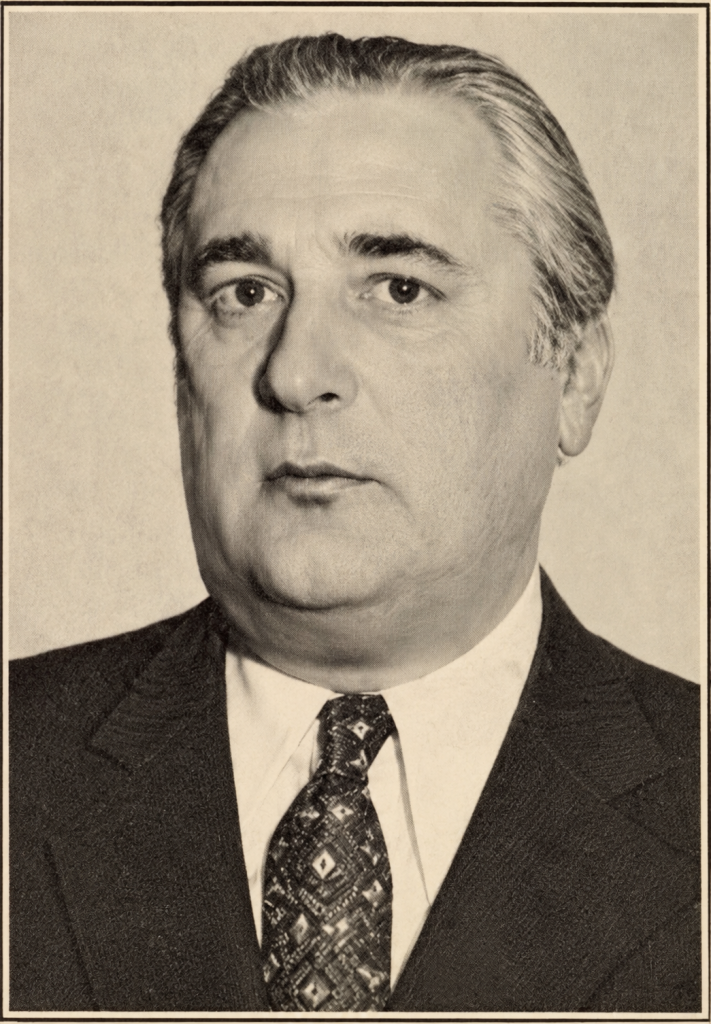
On 11 December 1940, a technical school for Jewish youth opened its doors in Bucharest. It was established under difficult and often dangerous conditions, when Jewish students were being expelled from schools and universities and Jewish professors were being dismissed from their positions. It became known as the Bercovici School.
Following the rise of General Ion Antonescu’s regime in September 1940, Romanian Jews were subjected to systematic racial discrimination, exclusion from public life, forced labor, pogroms, and deportations. Thousands of young Jews were deprived not only of educational opportunities but also of any certainty regarding their future.
In these circumstances, the Jewish Professor Martin Bercovici (1902-1971) took an extraordinary initiative.
Dismissed from his position as Technical Director of the General Society of Gas and Electricity because of antisemitic racial legislation, Bercovici sought a way to support Jewish youth whose educational and professional aspirations had been abruptly destroyed.
In November 1940, under the auspices of the Jewish Community of Bucharest, he obtained authorization to establish what was initially called the Courses for Technical Preparation and subsequently known as the Bercovici School. What began as a modest initiative quickly developed into an extraordinary educational center. By 1942, the school enrolled approximately 500 students and employed about 50 professors.
Courses were offered in electrical, mechanical, and civil engineering, architecture, mathematics, chemistry, industrial and decorative drawing, textiles, hygiene, dentistry, and other practical disciplines. All of the professors were themselves Jewish academics and professionals who had lost their positions following the implementation of antisemitic laws.
The significance of the Bercovici School extended well beyond education. It served as a refuge.
Bercovici actively helped young Jews who had fled from provincial towns and regions where they faced forced labor, persecution, and the threat of deportation. He assisted students in finding accommodation, arranged fee waivers for those unable to pay, and used every available means to help them remain in Bucharest.
Perhaps most importantly, Bercovici worked to ensure that students fulfilled their compulsory labor requirements through assignments at the National Institute of Statistics. There, they performed clerical and documentation work rather than being sent to physically exhausting and dangerous labor battalions.
For some students, these interventions may well have saved their lives.
One such example is the Architect Isac (Itzhak) Gluckman, who attended the institution between 1942 and 1944. Before arriving at the school, he had already experienced forced labor and lived under the constant fear of being recalled for new labor assignments. Like many young Romanian Jews of his generation, his education had been interrupted and his future seemed uncertain.
Gluckman later recalled hearing that a technical school for Jewish youth was being established, directed by an engineer named Martin Bercovici. Initially seeking a photography course, he was encouraged instead to enroll in a drawing program.
What appeared at the time to be a small decision became a turning point in his life.
The Bercovici School provided more than instruction. It offered structure, community, protection, and hope, not only for the students but also for the school’s professors and administrators, themselves victims of exclusion.
They viewed their work as both a professional and a moral mission. Quite a few took reduced pay or no pay and even contributed from their own personal funds, as in the case of the Director, in order to allow the school to survive and grow.
As Allied bombing intensified in 1944, Jewish laborers were often required to participate in clearing destruction and recovering bodies from bombed buildings.
Gluckman and his fellow students from the Bercovici School were assigned to documentation work through the Institute of Statistics, recording the effects of the air raids across Bucharest. He remained at the Bercovici School until Romania’s political reversal on 23 August 1944 and the subsequent liberation of Romanian Jews from the restrictions and fears that had dominated their daily lives.
The influence of the Bercovici School did not end with the war. Romanian authorities recognized the courses completed at the institution, allowing its graduates to continue their education and professional development.
For Gluckman, who had to stop formal schooling at the age of 14 to work as a photography apprentice, this recognition was transformative. The diploma and recommendations he received from the Bercovici School enabled him to gain admission to the Faculty of Architecture in Bucharest without an entrance examination. He went on to become a successful architect in Romania before making Aliyah with his family in 1970. In Israel, he continued his professional career and fulfilled his Zionist aspirations.
Gluckman’s story demonstrates how educational rescue can become a life rescue. The opportunities created by Bercovici not only helped students survive the war years, but also enabled them to build meaningful postwar professional and personal lives. Today, descendants of former students and professors live in Israel, Europe, and North and South America.
Unfortunately, the story of the Bercovici School remains insufficiently known.
While much has been written about the destruction of Jewish educational institutions during the Holocaust, far less attention has been devoted to the extraordinary efforts that succeeded in preserving education under conditions of persecution.
The Bercovici School deserves recognition not merely as an academic institution but as a unique example of Jewish resilience, communal self-help, and civil courage. Bercovici’s achievement was not only the founding of a school. It was the creation of a protective framework that preserved knowledge, professional aspirations, human dignity, and, in many cases, the possibility of survival itself.
As descendants of those whose lives were touched by the school, we believe that this history deserves broader scholarly attention. We also seek testimonies, documents, photographs, and family memories from descendants of former students and faculty members. Every additional account helps reconstruct an important and under-researched chapter in the history of Romanian Jewry during the Holocaust.
Remembering Professor Bercovici means recognizing a form of resistance that is sometimes overlooked: the determination to educate when education is forbidden, to build futures when the world is collapsing, and to protect human lives through knowledge, opportunity, and hope.