
A Tale of Darkness and Love
A former white supremacist shares his story
Noah Abrahams
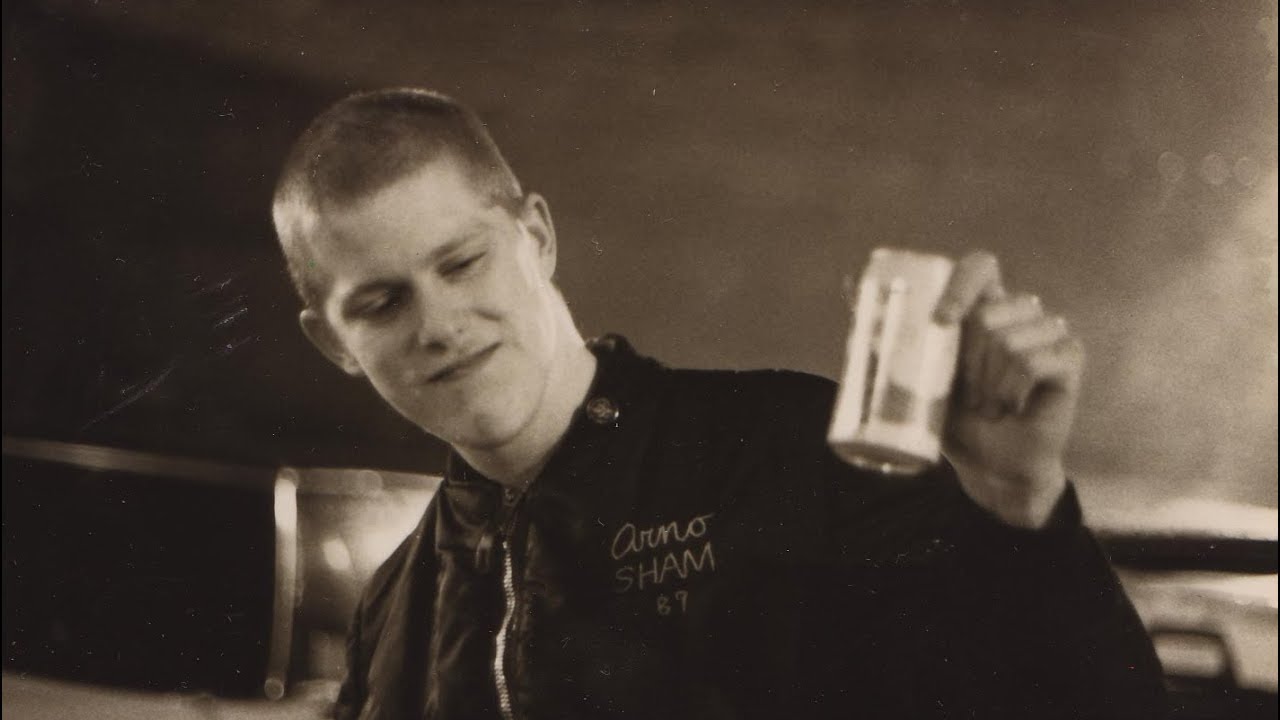
Arno Michaelis, a former front man of the white supremacist metal band “Centurion,” became one of the most effective voices working against extremism in America. We met in June at a San Diego World Affairs Council event in California. He was a guest speaker at the workshop “After Extremism: Building Bridges and Strengthening Community.”
He is 55, father of one, from Milwaukee.
The first thing I saw was a frightening giant. Six feet five, covered in tattoos. A second look: the tattoos advocate peace. Across his knuckles are the words “love wins.”
The once Jew-hater works today as a Peer Support Specialist at “Parents for Peace” – providing tools, support, and a safe space for parents who fear their child is heading down a dangerous or extreme path.
I knew I was in safe hands when he told me about the organization’s work post-October 7. “Parents for Peace” launched its “Antisemitism Intervention and Recovery (AIR) ” Program to counter anti-Jewish hatred across the ideological spectrum. In 2025, 70% of its helpline cases reportedly contained an anti-Jewish component, ranging from far-right white nationalism and jihadist networks to far-left movements.
The organization describes antisemitism as a “gateway ideology” capable of connecting otherwise incompatible extremist groups – a characterization that, coming from Michaelis, carries the weight of lived experience.
Raised in the Jewish suburb of Mequon, Wisconsin, Michaelis grew up with Jewish friends. He attended their Bar and Bat Mitzvahs. Raised in a non-religious, alcoholic, emotionally cold household, he developed a drinking problem at age 14.
“I am an adrenaline junkie genetically,” he said. “I come from two long lines of alcoholism and have been predisposed to anti-social behavior.”
He started drinking at 14, got into punk rock at around the same time, and discovered that nothing shocked people quite like a swastika. The school bus bully turned by middle school to serious vandalism.
The logic was not political. It was emotional.
His introduction to white nationalism came through music – white power skinhead bands whose lyrics told him that the white race was threatened by a Jewish conspiracy to exterminate it.
That this message contradicted his lived experience did not matter to Michaelis.
The ideology was irrelevant. The addiction was the point.
According to a 2022 study published in Terrorism and Political Violence, of 91 former white supremacists examined, 63% had experienced four or more adverse childhood experiences (involving abuse, neglect or house dysfunction) before turning 18, compared with 16% of the general US population.
In his books, My Life After Hate (2012) and The Gift of Our Wounds (2018), Michaelis described how the thrill of hate was, from the beginning, indistinguishable from the thrill of any other substance.
By his mid-twenties, he was one of the more successful purveyors of white-supremacist hatred in the United States. His band sold over 20,000 CDs around the globe.
The music presented white people as victims, blamed Jews and racial minorities for society’s problems, and called for racial violence and a “holy war.”
Centurion’s 1994 album “Fourteen Words” – a direct reference to the slogan “we must secure the existence of our people and a future for white children,” coined by neo-Nazi David Lane – was violent white-supremacist propaganda set to heavy metal.
One song, “The Planet Is Ours,” advocated removing Jews and non-white people entirely from the world. Another imagined an older generation celebrating Hitler as it told children how Jews and Black people had been violently expelled.
The one question every former member of a white supremacist gets asked is: why did you leave?
In Michaelis’ case, it took until his mid-20s for the realization that his path is destructive to kick in. He had just broken up with his partner and become a single parent to their 18-month-old daughter.
“If I didn’t leave, prison or death would take me from my daughter,” he told me.
The ideology did not collapse under the weight of argument or evidence. It collapsed under the weight of love.
Since leaving white supremacism behind in 1996, he has spent three decades exploring how and why human beings do evil. He adopted Buddhism and co-founded the community group Serve2Unite with Pardeep Kaleka, whose father was killed in the Wisconsin Sikh temple shooting in 2012.
The answer to why people commit atrocities, he says, is bad education.
“If I listen to music every day that tells me the Jews are trying to kill me, I begin to believe that anybody who doesn’t look like me is a weapon,” he explained. “When you practice hate and violence, it becomes a norm. And when you’re habituated to it, beautiful things about our human experience – love, forgiveness, humor, kindness, music, art – not only become unfamiliar, but begin to repulse you.”
Fear is an engine that keeps the whole machinery of hate running.
“When you’re addicted to hate, you are constantly looking for reasons to be terrified. Extremists go through every waking moment being terrified of the world around them. There are no genuine friends in that world and no one can be trusted.”
And underneath all of it, beneath the ideology and the music and the violence, is something simpler and more devastating: “The feelings of hatred stem from a hatred of yourself. I don’t think you can truly hate someone else unless you hate yourself first.”
Michaelis believes that Jew hatred stems from centuries of insecurity, jealousy, and envy. The reason antisemitism retains its appeal, he argues, is simple. Jews have not only survived thousands of years of the most heinous oppression that human beings are capable of, but they have thrived in spite of it. For those who are failing – or who feel they are failing – that fact demands an explanation.
“People believe there has to be something shady attached to Jewish success,” Michaelis said. “That’s why the Protocols of Zion hoax still resonates. When I work with white nationalists nowadays, they rattle off garbage about ‘the Rothschilds and the Jews.’ These are all old, debunked conspiracies that they still come back to.”
Hateful conspiracies, Michaelis argues, serve a psychological function. They are crutches for people who cannot bear the weight of their own inadequacy.
The obsession with racial survival dictates degrading expectations from women, and Michaelis is unsparing on this point.
“In both Islamism and white nationalism, the groups will tell you that they see women as special, important, and as the gender who needs protecting. It’s a lie. They won’t let women be in charge or take advice from them. The men make the rules. The women shut up, don’t talk back, and get pregnant.”
If he could go back in time and talk to his younger self?
“I would tell him to love the world, because when you love the world, the world will love you back. The white race does not care about you. All the time and energy spent on the white race leads to nothing. Even if it did care about you, there would be infighting about who is whiter.”